How to Match a Personalised Football Flag Design to the Fan
06 November 2026
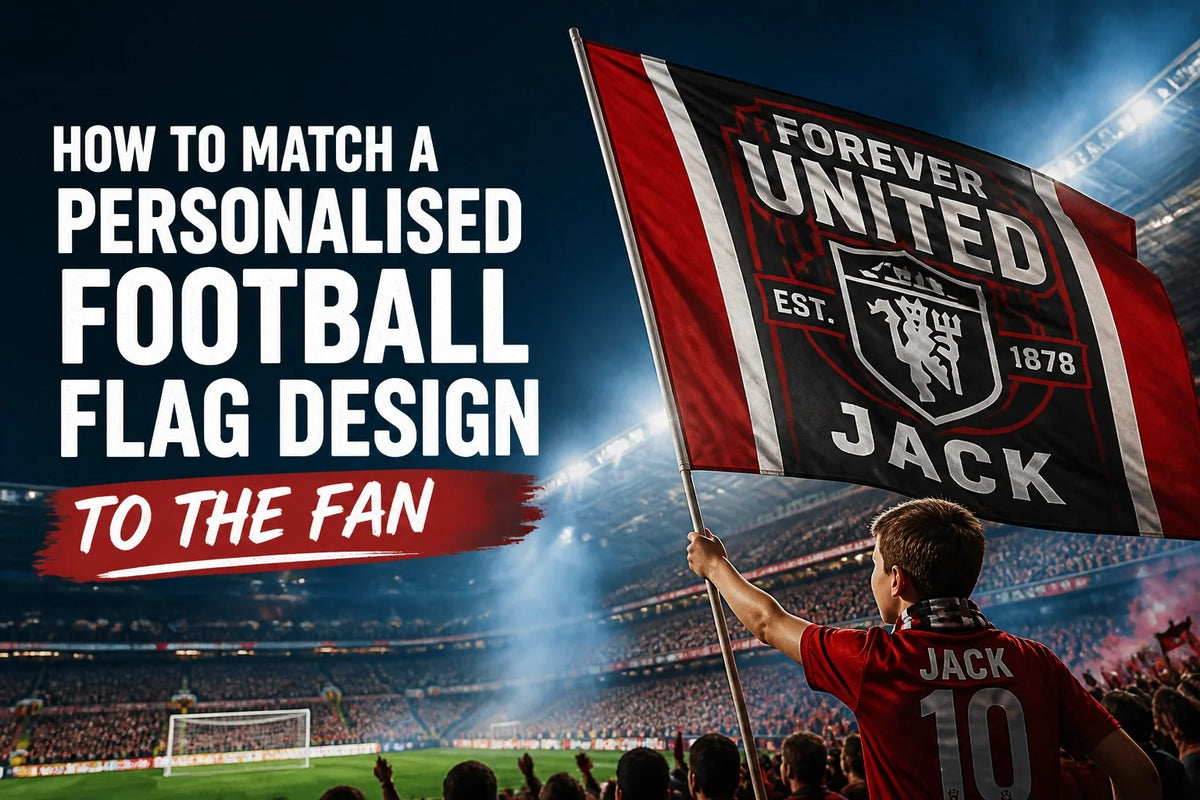
Buying a gift for a football fan when you don't follow the game yourself can feel like a guessing game. You want to get a personalised football flag that feels thoughtful and personal, but you're not sure where to start. The good news is that you don't need to know the offside rule to choose a design that will land. The real challenge isn't using a design tool; it's picking a concept the recipient will instantly recognise as theirs. This post gives you a practical shortcut by looking at three common fan types: the season ticket veteran, the junior player, and the lapsed fan. By mapping their age, club, and era to a design idea, you can buy with confidence. We'll walk through how to read the recipient, turn a fan type into a flag design with four simple decisions, look at three worked examples, and flag five mistakes that make a gift feel generic. We'll also cover ordering and personalisation, so you can go from fan type to finished flag without the guesswork.
Why the Design Is the Hard Part, Not the Design Tool

Picking colours, images and text in an online builder takes minutes. Deciding which concept the recipient will read as personal is where gift buyers hesitate most.
A flag that lands points at something the recipient actually knows: a stand they used to stand in, a kit era, a nickname, or a match they still talk about. Generic football gifts miss because they could belong to any supporter.
If you do not follow football, you cannot test whether a design feels right. You need a repeatable shortcut based on what you already know about the person, not on football knowledge.
That shortcut runs in four steps: read the recipient by age, club and era; assign one of three fan types; translate that into colours, wording and one visual anchor; then size the flag for where it will hang. You can find your football flag once you have those decisions made.
Recreation and culture is a large and fast-rising slice of household spending, according to ONS Family Spending figures for FYE 2025, which show it taking 12% (£82.10) of average weekly household expenditure at the time (ONS). In short, a gift flag lands when the design carries a detail only the recipient would recognise.
Read the Recipient First: Age, Club and Era
Once the design problem is clear, start with the person, not the builder. Age gives you the visual language. As a rough guide, fans who came of age in the 1970s or 1980s often warm to retro crest styles and older colour shades, while someone in their twenties may picture recent European nights and the current kit palette. Treat that as a hunch, not a rule.
Club is the detail a non-fan can almost always find: a photo on a wall, a keyring, a mug, the sticker on their car. If you truly cannot tell, ask a family member rather than guessing a colour. Era matters most. Ask when they cared most, because the years someone was a teenager are often a better guide than the current season.
Before opening any design tool, answer three questions: which club, roughly which years, and do they still go or watch now? Two out of three usually places someone well enough. The three fan types below are a practical shortcut, not research findings or formal fan segmentation. If you are searching for a personalised football flag in the UK, remember the club on the badge is what makes the gift feel local and specific. If they play as well as support, the FOR THE PLAYER IN FORM range is worth a look once you know their team colours.

Fan Type One: the Season Ticket Veteran
This is the fan who goes, or used to go, home and away. They know the ground, have firm opinions about the away end, and judge a football gift by whether the detail is right.
For them, terrace culture matters: a stand or end name, a short chant fragment spelled correctly, a specific season, a retro crest, or away day colours rather than the current home kit. Good concepts are simple. Club colours with the stand name and the years they have been going underneath. A chant fragment as the main text, with no extra slogan. A double sided flag so it reads correctly from both sides in a crowd.
Avoid generic motivational slogans, modern marketing lines dressed up as terrace culture, and the latest third kit if they still wear a shirt from a decade ago. For size, 5x3ft or 6x4ft suits someone who might genuinely carry it to a match. A 3x2ft personalised football flag works as a wall piece. Think about where it will be held or hung, not print specs. If you want a visual starting point, our Team of the Season flags show how club colours and a season can be combined.
Fan Type Two: the Junior Player
Where the veteran's flag carries the crowd, the junior player's carries their own name. This is a child or teenager who plays as well as supports, and whose own team often matters more to them than whatever is on television.
Design around their name, squad number and team colours. Their position or a nickname the team already uses works well too, along with a badge or artwork their own club allows. A small flag with first name, shirt number and team colours suits a bedroom wall, while matching sets in the same colours work for a whole youth side.
Avoid club-only designs that ignore the fact they play, adult wording they will not use, and terrace references from before they were born.
On size, 3x2ft is bedroom territory, while 5x3ft and above suits a garden, clubhouse or team set. If it will hang in a window and needs to read from both sides, double-sided printing is the practical choice.
Once you have the name and the number, make the design yours and check the wording still reads clearly at a distance. The next fan type is harder to spot from the outside.
Fan Type Three: the Lapsed Fan
Next comes the lapsed fan: someone who drifted away from attending but still checks the results. They are sentimental about one period rather than the present, so nostalgia is your design brief. Think a cup run, a first match, a player era, or the family member who took them in the first place.
Use a muted retro palette with the crest from their era, warm wording rather than tribal banter, and a date such as 1989 or 1994 as the focal detail instead of a slogan. A warm phrase such as BE WHAT YOU WANT can work well.
Avoid current in jokes, aggressive rivalry content, and anything that presumes they still go week to week, which can feel like a reminder of what they dropped. Choose weather resistant materials if the flag will live outside. For UK buyers ordering a personalised football flag, match the era first, then refine.
Turning a Fan Type Into a Flag Design: Four Decisions
Whichever type you've landed on, the jump from fan type to finished flag comes down to four decisions.
Colours. Use club colours, an era-accurate shade if the recipient is nostalgic, or a simple two-tone palette that still reads clearly from ten metres across a stand or garden.

Wording and text. Keep it to one short line, plus a second supporting line at most. Spell names correctly, check how many words stay legible at the size you've chosen, and remember that a long sentence won't survive distance.
Badges and permitted artwork. What you can reproduce depends on permission, so ask before assuming a club badge or specific crest can be printed, and keep a badge-free fallback ready (a name and a year does the job).
Layout and printing direction. Choose portrait or landscape, single or double sided, and cap the design at about three elements in total so it looks deliberate rather than crowded.
Then match size to use: 3x2ft for a bedroom wall, 5x3ft for a garden or bar, and 6x4ft or 8x6ft for crowds, clubhouses and larger displays. Every size from 3x2ft to 8x6ft is available. Once those four are settled, you can make the design yours and check it in the preview before printing.
Three Worked Examples for Gift Buyers Who Do Not Follow Football
Here is the method in action across three illustrative scenarios, not real customers or results. Each starts with what you already know: name, club, era, type.
Your brother-in-law is 58, supports a club you have heard of, and stopped going in the 1990s. Type: lapsed fan. Design: era crest, the year he started going, warm wording, 5x3ft for his back room.
Your daughter is 12, plays for a local youth team and watches football with her grandad. Type: junior player. Design: her first name, squad number and team colours, 3x2ft above her desk.
Your mate still goes home and away whenever he can. Type: season-ticket veteran. Design: a short chant fragment and the name of his end, double sided, 6x4ft for away days.
The pattern is name, club, era, type, then one colour scheme and one visual anchor. Once you know the person, each takes about a minute to reason out. The same four decisions apply to all three. You can also add a personalised gift note to finish the present.
Five Mistakes That Make a Gift Flag Feel Generic
Those examples show the method working. Now the flip side: five traps that make a personalised football flag feel generic.
Crest only. A club badge with no name, year or shared reference could belong to any supporter of that club.
Wrong era. Using today's kit colours when their identity sits in an older era is the most common miss.
Text overload. Four lines that looked striking on a laptop can become unreadable on a 3x2ft flag seen from a few paces back.
Ignoring the player. If they play themselves, their own name, number and team colours matter more than a professional badge.
Practicalities. Decide indoors or outdoors, single or double sided, and check wording legibility from the distance it will actually be viewed.
Avoid these and the design stays personal. If you want the gift to feel finished before it is opened, consider luxury gift packaging.
From Fan Type to Finished Flag: Ordering and Personalisation
Once you've dodged those, the ordering itself is straightforward. Football Fan Flags supplies fully customisable football fan flags for fans, clubs and youth teams, personalised with your own colours, wording, text, badges, team logos and permitted artwork using an online design and preview tool. The preview matters for gift buyers in particular: it is the only way to check that a name, a date and a chant fragment all read clearly at the size you have chosen, before anyone prints anything.
Sizes run from 3x2ft through 5x3ft and 6x4ft up to 8x6ft, with single or double sided printing, so you can match the flag to a bedroom wall, a garden, a clubhouse or a crowd. Flags are printed in the UK with reinforced edges and eyelets and durable weather resistant materials, and fire rated fabric with certificates available on request. Fast production and delivery means a flag remains a realistic gift even if you have left it late.
Arrive at the design tool knowing your fan type plus one colour scheme and one visual anchor, and you will spend your time refining rather than deciding.
A Design They Recognise as Theirs
Before you order, run the method one last time: age, club and era, then the fan type that fits, then colours, one short line of wording and a single visual anchor. Tonight, jot down the three things you already know about the recipient. If you only have one, make it the era: a specific year or period will beat any generic football message. Before ordering, stand back from the screen to test the design at a distance, use the preview tool to confirm the wording is legible at your chosen size, and check whether a club badge or artwork needs permission. The personalisation tool is the easy part. The gift lands because the concept is recognisable, and any of the three fan types gives a non-fan buyer a defensible starting point.
Conclusion
Sizes run from 3x2ft up to 8x6ft, printed in the UK with reinforced edges and eyelets. The concept is the hard part, and you have already done it.